
Adrenaline
Bungy Jumping
Where it all began — the Kawarau Bridge, the Nevis, and the Ledge.
Read more →Queenstown built its reputation on adventure, but the best trip mixes headline thrills with lake, trail, food and weather-proof breathing room.
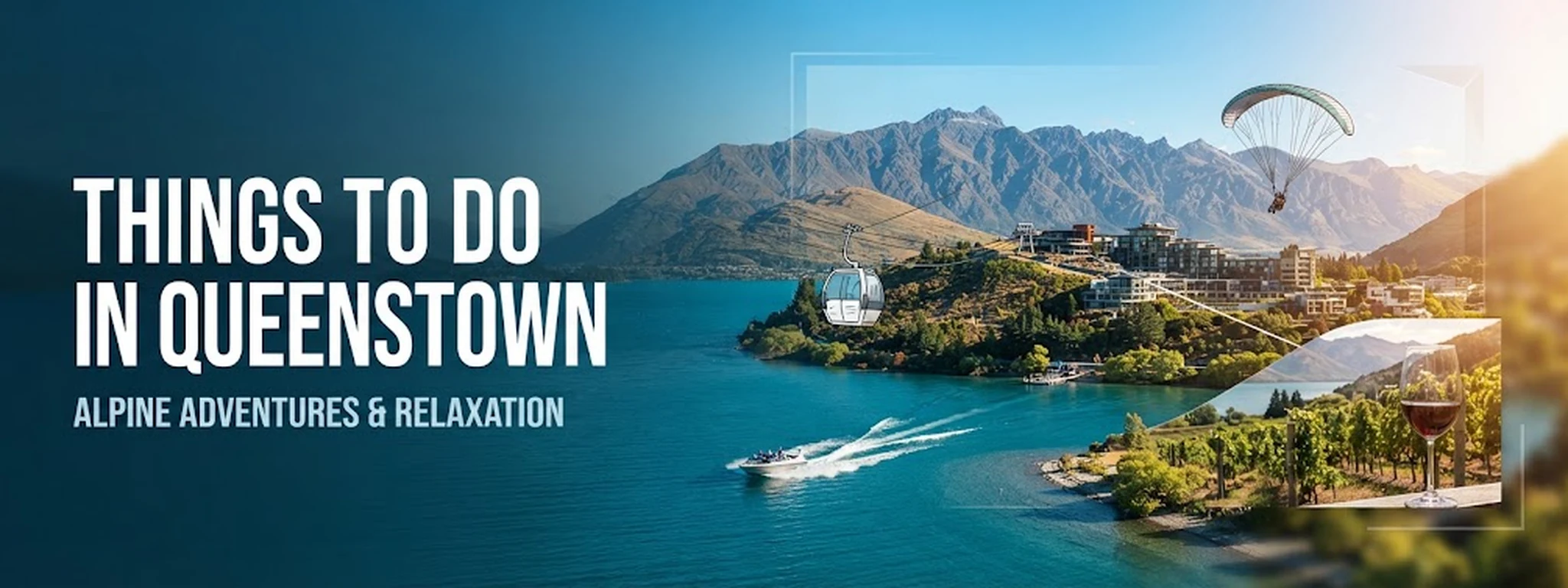
Queenstown can be an adrenaline holiday, a scenic base or both. The useful question is not “what is the longest possible activity list?” but “which experiences deserve the best weather and energy?” Bungy, jet boating and skydiving earn the headlines; the gondola, lake cruises, Queenstown Gardens, walks, wineries and day trips give the itinerary contrast.
I would build the trip around one or two non-negotiable experiences, then add flexible options by location. That approach leaves room for mountain weather, operator changes and the fact that a long Milford Sound day or a ski day is already a full day. It also prevents a short Queenstown stay becoming a sequence of check-in desks.
Where it all began — the Kawarau Bridge, the Nevis, and the Ledge.
Read more →A century-old steamship crossing to a working high-country farm.
Read more →Drive-up panoramic views, resident wildlife, and Lord of the Rings filming spots.
Read more →Start by deciding whether Queenstown is the destination or the launch point. A first visit focused on town can combine the lakefront, gondola, Gardens and one paid adventure without a car. A regional trip needs more space for Arrowtown, Gibbston, Glenorchy, Wānaka or Milford Sound. Skiing adds another set of full-day commitments.
Do not count a day trip as a spare day. Milford Sound by road is long, and even nearby excursions involve pickups, road conditions and stops. If you only have two days, choosing one major excursion and one Queenstown day is usually more satisfying than trying to sample every direction.
Bungy jumping, skydiving and jet boating are different kinds of commitment. Bungy is a brief, intense personal challenge; skydiving is highly weather-dependent and occupies more of the day; a jet boat is easier to share with a mixed group, subject to the operator's age, height and health rules.
Read the live operator conditions before paying. Minimum ages, weights, medical restrictions, spectator access, transfer inclusions and cancellation terms are product-specific. A comparison written months ago cannot overrule the booking page for your exact session.
The gondola and luge are easy to pair with the CBD because the base terminal is above town. Queenstown Gardens and the lakefront are the simplest low-cost counterweight to a heavily booked itinerary. A TSS Earnslaw or Walter Peak experience gives the lake more time and structure.
These are useful arrival-day options, but check the final admission, sailing or operating time rather than assuming “close to town” means available at any hour. In poor weather, the gondola may still run while the view is limited; decide whether the ride or the panorama is your priority.
Mountain cloud and wind can disrupt skydiving, scenic flights and some alpine activities before they trouble a café or lakeside walk. If one flight-based experience matters deeply, place it early in the stay and keep a later window free. That gives the operator somewhere to move you if conditions intervene.
Forecast icons are not enough for outdoor plans. New Zealand's official visitor-safety guidance points walkers to the Mountain Safety Council's Plan My Walk service for track alerts, weather, warnings and shareable trip plans. For any route beyond an urban stroll, choose a trip that matches the group's skills, check conditions and tell someone the plan.
Queenstown activities can make both the budget and the timetable feel crowded. A durable day combines one paid highlight with something free and leaves a meal or rest block unbooked. For example: jet boat plus Gardens and lakefront; gondola plus a relaxed CBD afternoon; or a wine day followed by an uncomplicated dinner near the hotel.
The recovery block is not wasted time. It absorbs delayed pickups, weather changes, equipment returns and the simple fatigue that follows an early ski bus or a high-adrenaline morning.
Not everybody has to buy the same ticket. Before choosing an adventure, check whether non-participants can watch, whether the transfer is restricted to booked customers, and how long the whole group will be separated. Kawarau bungy is easier for spectators than the remote Nevis experience; a lakefront walk is easier to rejoin than an alpine trail.
For children, confirm the operator's current age, height, weight and supervision rules. “Family-friendly” describes an experience broadly; it does not guarantee every child qualifies for every component.
Central Queenstown activities are easy to combine on foot. Frankton works naturally with the airport and shopping; Arthurs Point sits toward Coronet Peak and Shotover experiences; Kawarau Bridge and Gibbston pair well on an eastbound day. Grouping by location saves more time than forcing together unrelated products because a package once looked cheap.
Check exactly what a combo includes. Transfers, photos, equipment and rescheduling rules vary, and the lowest headline price is not automatically the best day.
Winter gives skiing the centre of gravity, but road, chain and mountain-opening conditions matter. Summer brings long days for walking, cycling and water-based activities. Spring and autumn can offer a calmer town rhythm, although cold starts, shorter daylight or changeable conditions still shape outdoor plans.
Use the Best Time to Visit and Weather guides for the broad pattern, then verify the live operator or track status close to the day.
The best Queenstown itinerary is selective. Choose the experiences that would genuinely disappoint you to miss, give weather-dependent plans room to move, and use the lakefront, Gardens and walkable centre to connect the expensive highlights. You will remember the contrast between the big moments, not the number of booking confirmations.
Cheers, Carpe Diem & leave enough daylight to enjoy the view between the thrills! 🍻⏳🏔️
TATS Man
Your Queenstown must-do editor & weather-buffer mate